
Industrial TFT LCD Displays for Energy Storage: HMI Design for BESS & PCS
The rapid expansion of AI infrastructure, data centers, and grid modernization is fundamentally transforming global energy demands. To stabilize fluctuating renewable energy sources and manage peak power loads, Battery Energy Storage Systems (BESS) and Power Conversion Systems (PCS) have become foundational to modern energy infrastructure.
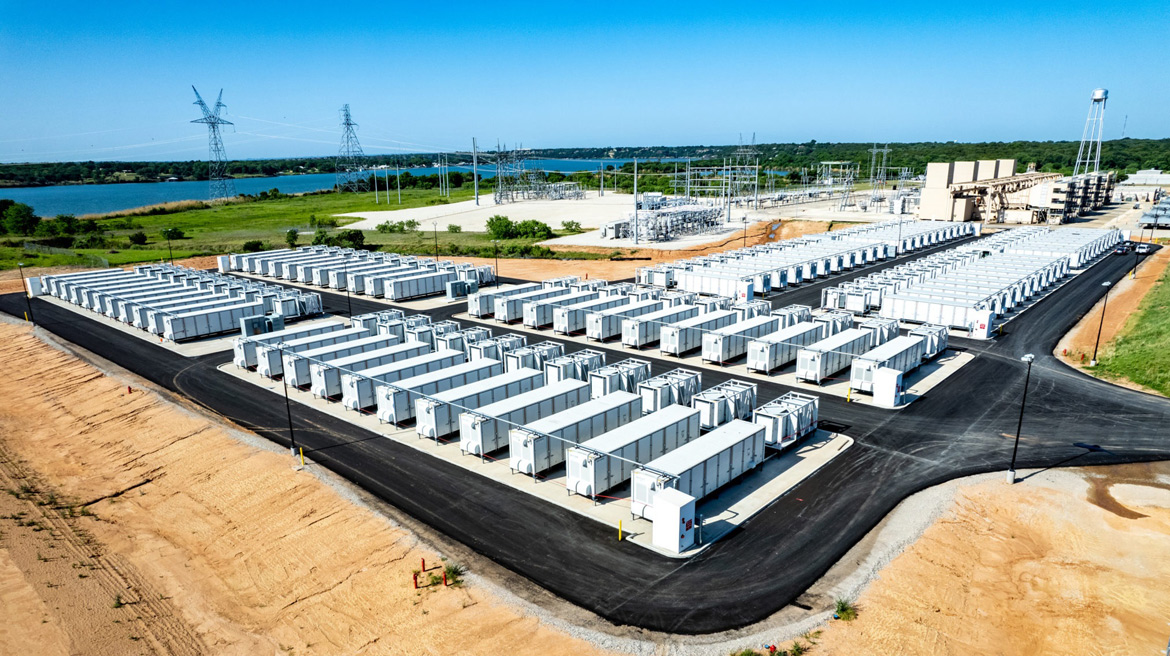
Industrial TFT LCD displays utilized in these energy systems must maintain continuous 24/7 readability and responsiveness under extreme environmental conditions, including thermal shock, electrical noise, and direct weather exposure.
Key Takeaways: HMI Design for BESS & PCS
The Environment Gap: Standard commercial displays fail in Battery Energy Storage Systems (BESS) due to thermal instability, moisture ingress, and sunlight washout.
Sunlight Readability: Outdoor energy enclosures require industrial TFT LCDs with high luminance (typically 850+ cd/m²) to ensure field engineers can accurately read diagnostics in direct sunlight.
Extreme Weather Tolerance: To prevent liquid crystal freezing or isotropic blackening, displays must support wide operating temperatures ranging from -20°C to +70°C.
Rugged Infrastructure: Front cover lenses must meet IK08 impact resistance and IPX5/IP65 water protection standards to survive accidental tool strikes, driving rain, and heavy vibrations.
Signal Integrity (EMI): LVDS (Low-Voltage Differential Signaling) is the preferred interface to block out the heavy electromagnetic noise generated by Power Conversion Systems (PCS) and inverters.
Battery Storage System & TFT LCD
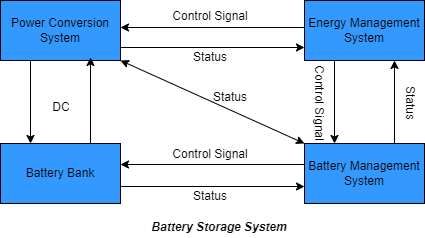
Inside every BESS cabinet and PCS unit is a Human-Machine Interface (HMI). Operators rely on these interfaces for critical monitoring, local diagnostics, alarm management, and routine maintenance. In these high-stakes environments, the display is not merely a cosmetic interface; it is a vital piece of operational infrastructure. TFT LCDs can provide real-time data on battery status, power output, energy consumption and energy storage system's health. These information can help users optimize their energy usage and reduce their carbon footprint.
Why Consumer-Grade Displays Fail in Energy Storage Applications
Commercial-grade displays are engineered for climate-controlled indoor environments. When deployed in industrial energy infrastructure, consumer displays frequently exhibit critical points of failure, including:
- Total loss of visibility under direct sunlight or high ambient light.
- Erratic or unresponsive touch performance due to moisture ingress.
- Structural failure from insufficient impact protection.
- Premature backlight degradation caused by thermal instability.
- Signal loss driven by connector vibration and electromagnetic interference (EMI).
Because BESS and PCS units are deployed across outdoor utility substations, renewable energy farms, EV charging hubs, and industrial power rooms, they require purpose-built, industrial-grade display modules.
Core Technical Requirements for Modern BESS and PCS HMI Displays
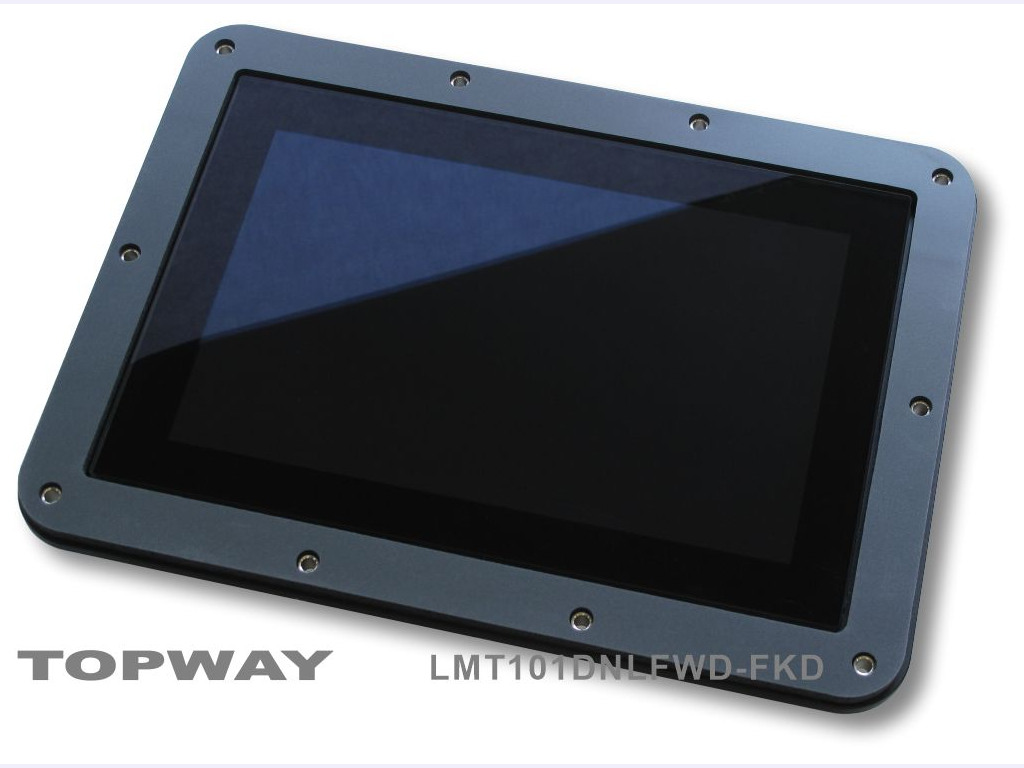
To ensure reliable operation, energy infrastructure engineers must select displays with specific industrial characteristics. The TOPWAY LMT101DNLFWD-FKD LCD Module serves as a prime example of an optimized industrial display designed to meet these exacting standards.
1. Sunlight Readability for Outdoor Deployments
Outdoor energy storage cabinets are routinely exposed to direct sunlight, which can wash out standard screens. A high-brightness TFT LCD is required so maintenance engineers can accurately read diagnostic data without visibility degradation. The TOPWAY 10.1-inch module delivers a typical luminance of 850 cd/m2, ensuring clear readability in high-ambient-light environments.
2. Wide Temperature Stability
Energy storage systems experience severe thermal swings between day and night cycles. Industrial displays must feature extended temperature tolerances to prevent liquid crystal freezing or isotropic failure (blackening). This module guarantees stable performance across a wide thermal range:
- Operating temperature: -20°C to +70°C.
- Storage temperature: -30°C to +80°C.
3. Rugged Front Protection (IK08 & IPX5)
Industrial HMI units are constantly exposed to dust, driving rain, accidental impacts, and heavy vibration. To maintain operational integrity, this TFT LCD module incorporates:
- IK08 Impact Resistance: Secures the cover lens against mechanical shocks and accidental tool strikes.
- IPX5 Water Protection: Ensures the front cover lens resists low-pressure water jets after proper installation.
4. LVDS Interface for Signal Integrity
Despite the rise of newer consumer interfaces, industrial energy control systems rely heavily on Low-Voltage Differential Signaling (LVDS). LVDS provides crucial advantages in electrically noisy environments like PCS cabinets, including low EMI characteristics and highly stable signal transmission. This module utilizes an 18-bit LVDS interface, ensuring seamless integration with industrial embedded computers and control systems.
5. Capacitive Touch for Advanced Diagnostics
Modern energy management requires intuitive, highly responsive graphical interfaces. By integrating a Capacitive Touch Panel with a USB interface, operators can efficiently navigate local diagnostics, configure system parameters, and acknowledge alarms.
Total Cost of Ownership
While engineering teams prioritize technical reliability, procurement and purchasing departments focus on the Total Cost of Ownership (TCO) and long-term ROI. This industrial TFT LCD module successfully bridges both sets of requirements.
The display's backlight is rated for a 50,000-hour lifespan. When combined with the industry-grade a-Si TFT active matrix display technology and robust environmental protections, this module is built to endure years of continuous operation.
- For Engineering: The high-grade components mean fewer field failures, minimized maintenance truck rolls, and a significantly higher Mean Time Between Failures (MTBF).
- For Purchasing: The 50,000-hour operational life provides direct day-to-day savings by eliminating the recurring replacement costs, labor expenses, and costly system downtime associated with failing consumer-grade screens.
This alignment between extreme technical reliability and measurable operational savings makes it a highly cost-effective HMI solution for the BESS and PCS market segments.
Technical Specifications: Topway 10.1" Industrial TFT LCD
| Model | LMT101DNLFWD-FKD |
| Screen Size | 10.1-inch (Diagonal) |
| Resolution | 1280(RGB) x 800 pixels |
| Signal Interface | LVDS (18 bits) |
| Touch Panel | Capacitive Touch Panel (USB Touch Interface) |
| Typical Luminance | 850 cd/m2 |
| Operating Temperature | -20°C to +70°C |
| Protection Rating | IPX5 (Front Cover after installation) / IK08 (Cover Lens) |
| Backlight Life | 50,000 Hours |
FAQ
Question: What type of display is commonly used in BESS and PCS systems?
Answer: Most industrial Battery Energy Storage Systems (BESS) and Power Conversion Systems (PCS) use industrial TFT LCD displays with LVDS or HDMI interfaces. These displays are designed for continuous operation, wide temperature environments, and industrial HMI applications.
Question: Why is sunlight readability important for energy storage HMI displays?
Answer: Many energy storage systems are installed outdoors or inside high-brightness industrial environments. A sunlight-readable TFT LCD with high luminance helps operators clearly view alarms, diagnostics, and system status during maintenance and field operation.
The discussed 10.1-inch display has luminance up to 850 cd/m².
Question: Why do industrial energy systems still use LVDS displays?
Answer: LVDS remains widely used in industrial systems because it provides:
- stable high-speed transmission
- low electromagnetic interference (EMI)
- strong noise immunity
- reliable long-distance signal integrity
These characteristics are important in electrically noisy industrial energy environments.
Question: What operating temperature is recommended for industrial TFT LCD displays?
Answer: Industrial energy applications typically require extended temperature support. TFT LCD module LMT070DNLFWD-FKD supports:
- operating temperature: -20°C to +70°C
- storage temperature: -30°C to +80°C
Question: What does IK08 mean for an industrial display?
Answer: IK08 is an impact protection rating that indicates resistance against mechanical shock and accidental impact.
For industrial HMI systems installed in BESS cabinets or power equipment, IK-rated front surfaces help improve durability during field maintenance and industrial operation.
Question: What does IPX5 mean for a TFT LCD module?
Answer: IPX5 indicates resistance to water jets from multiple directions after proper installation.
For outdoor energy infrastructure, IP-rated front panels help protect the display against moisture exposure and harsh environmental conditions.
The module supports IPX5 front protection after installation.
Question: Why are capacitive touch panels preferred in modern energy systems?
Answer: Capacitive touch panels provide:
- improved operator usability
- multi-touch capability
- glass panel is more durable than RTP
Question: What should engineers consider when integrating a TFT LCD into a BESS system?
Answers: Important engineering considerations include:
- EMC/EMI protection
- grounding design
- LVDS cable routing
- waterproof sealing
- thermal management
- proper power sequencing
- anti-static handling
Industrial TFT LCD integration quality directly affects long-term system reliability.
Conclusion
As the demands of AI computing and renewable energy integration accelerate, Battery Energy Storage Systems will continue to scale. Consequently, HMI reliability is no longer just a user-interface decision—it is a critical system engineering requirement that directly impacts bottom-line profitability.
By utilizing industrial TFT LCD modules equipped with a 50,000-hour backlight life, wide temperature tolerances, LVDS signal stability, and IK08/IPX5 ruggedization, manufacturers can guarantee that their energy infrastructure remains operational, cost-effective, and resilient in the field.
Topway has been producing TFT LCD for many years and has the know-hows on making TFT LCD for energy storage system. Please feel free to write to us about TFT LCD.